Tuesday, July 21, 2015

Into the Heart of the Mountains

Roccadaspide

City Hall in Ottati

Country life in the Cilento

Student art at the elementary school

Beautiful Ottati

Sandy with Signore Biagio

The Monti Alburni

Karst formations on Monte Panormo

Driving through a meadow

Tagliatelli con funghi porcini

Sinkhole with a sea of ferns

Hiking toward the summit

Back to Hans and the Alburni cattle

View from Monte Panormo

First gallery of the Grotta di San Michele

Maria Immaculata

Shrine of San Michele

The church in the rock

The abbey's bell

Terrace accessed from the belltower

Ruins of the abbey, Sant'Angelo and the Fasinella Valley

The Grotta

Last Friday we took care of some unfinished business in a most enjoyable way. Last year we had traveled to Castelcivita to explore that labyrinthine little town with its Aragonese tower perched saucily on the uppermost crest of the hill.  We wandered through the town, a little Medieval gem, almost completely inaccessible to cars, and then moseyed back to little Franco in a lower piazza and headed back down the mountain to a crossroad that would take us to two other noted sites.  Unfortunately, the road to Ottati, our first stop, was closed.  But by now we have become skeptical of such signs.  The message usually is, “This road is closed officially because a section has partially caved off, but if you’re a local and know the score, come on through and go slow at the frana.  (Wink, wink!)”

So we skirted right around that barrier, which covered only half the road anyway, suggestively, and zipped down the road for about 8 miles.  And there we encountered a huge fence, easily 10’ tall and 30’ wide, completely blocking the road from one side to the other.  Oops!  Looks like they’re serious for once.  We discovered afterwards that a bridge had been washed completely away.  With any luck at all, it will be replaced within the next 30 years.  But that was the end of our little giro. The detour to Ottati was a good 40 miles out of the way.

Back home we learned that the best way to go, under the circumstances, was to follow the flank of Monte Soprano to the south, then across the valley of the Calore River to Corleto Monforte on the slopes of the next range to the north, the Monti Alburni, ‘White Mountains’, and backtrack westward to Ottati.  Which we did last week.  We wound through the little village of Roccadaspide, “Rock of the Shield” or "Rock of the Viper” depending on which etymology you choose to believe, nodding to its own beautiful Aragonese tower and castle, then on past Bellosguardo, the aptly named “Good Lookout”, on a spur of the Alburni and overlooking the whole valley, to Corleto and down the road to Ottati, where we parked in a parcheggio at the eastern end of this tiny village (c. 800 inhabitants) and ambled through the town, splayed out along the flank of Monte Panormo on three levels.  Ottati is one of three so-called ‘Painted Villages” in the Cilento, towns where local artists are encouraged to display their work on the sides of buildings.  The paintings in this little village were all suggestive of local life, with scenes of harvest, of winter fun in the snow, of summer lazing, of farm life.  All quite charming, but, frankly, pretty underwhelming to me.  Sandy, on the other hand, seemed intent on capturing a photo of every last picture.  To me the most delightful picture of all was that of the 'Three Little Pigs" posted in a window of the town’s elementary school.  Kids and fairy tales are natural mates worldwide.

After an hour of meandering, we headed back to the car park, but decided to stop at a local bar-café to grab a quick cuppa and inquire about paninni.  It was still fairly early, about 11 am, but our next stop took us to the top of Monte Panormo, high above, where Roberto’s book informed us there was an excellent restaurant.  Now, Roberto is a friend, but I’ve grown a bit skeptical of some of his claims, and a round trip to Monte Panormo was easily a three hour jaunt, minimum.  Better safe than sorry, I say.  Pack some sandwiches and bottled water in the backpack and have a picnic as we hike the mountain trail, if need be. But, as so often has happened in our travels, when we asked about a local paninneria in the café, a kind elderly gentleman named Pietro Biagio stepped up, and in beautiful English, informed us that there was a bar just down the way that could help us.  Pietro explained when we remarked on his wonderful command of our language that he had worked for some 20 years in London, had come back to his native town to retire, and was comfortably ensconced in this peaceful, charming little village with his wife of many years. But that he always welcomed a chance to practice his English.  Pietro insisted on buying us coffee, and when we explained why we needed paninni assured us that the restaurant was indeed open every day and was well worth waiting for.  Then he insisted on hopping in his car and leading us back toward Corleto to the cutoff which led up to the top of the  mountain.  We thanked Pietro profusely, especially since we would never have noticed the small sign which announced the road to the top, and bade our new friend good-bye.

The Monti Alburni appear to be one long mountain, extending for some 20 miles almost due west and east, but are actually a series of connected peaks.  They receive their name from the dramatic white limestone cliffs at the top, up above the Mediterranean scrub and the subalpine forests.  We meandered the 11 kilometers to the top of Monte Panormo, the highest peak in the range at a respectable 5,390 feet.  These cliffs just soar up above the lower slopes, quite dramatically.  But as we made our way to the top, we discovered a bit of a deception on the part of our mountains.  This whole area is dominated by limestone rock and karstic formations, which explains the dozens of caves, many of which are religious shrines (and tourist attractions), including a huge one we have explored at Castelcivita that extends for some 3 miles into the mountain.  That also explains the towering pillars of limestone which create those dramatic cliffs.  But as we reached the higher elevations we discovered that those imposing cliffs were actually a series of stairstepped karstic formations, and on the ‘tread’ of each stair, in fact a plateau, were beautiful oak, beech and chestnut forests amidst which were lovely little alpine meadows.  The cliffs only appear to be monolithic because the eye looking up at them is deceived by the angle and insists on seeing a solid wall of rock instead of a series of walls.  And everywhere in those meadows are grazing herds of a characteristic breed of Alburni dairy cattle, as white as the mountain cliffs for which they are named.  They are a variant of a famous breed called podolica.  And Fernando had informed me that milk from these girls makes a particularly good form of cacciocavallo cheese.

Roberto’s book informed us that the road was well tarmacked until the last 500 meters, and he was correct...mostly.  Winter torrents had washed huge gullies in many places, and one little stretch had reverted to gravel, but we just slowed down to a crawl and little Hans made it fine.  We parked in a meadow among cattle and ambled over to a large complex with rental cabins and a restaurant with ample outdoor seating where there were probably 24 people hard at work at the serious Italian business of eating pranzo.  Now, neighbor, if that many people are willing to drive 7 miles up the side of a mountain over a road that left quite a lot to be desired, to me that’s a darned good recommendation for a restaurant.

There was no menu, but a very nice woman informed us of four different pasta dishes on the menu that day, all made from scratch from local products.  It was when she mentioned tagliatelli con funghi that our ears perked up.  “Porcini?”  “Si, porcini, non da qua, ma locali.”  Jackpot!  Homemade pasta with local porcini mushrooms, the king of all the funghi.  And don’t even go there with your rant about morels, I’m not listening.

Sandy ordered bottled water and I an Italian beer and we just relaxed and enjoyed the cool air and this scenic environment, nestled on a hillside among the beech trees, with a small herd of those local cows corralled at the top of the hill and a huge sinkhole surrounded by limestone pillars off to the left.  Soon enough, out came food, not our entree, but rather a beautiful plate of antipasti, in this case slices of the famous aged cheese from those very cattle, and a delicious hard sausage which the waitress informed us was made by the proprietor of the restaurant, a burly fellow named Francesco busying about among the diners.  Both cheese and sausage were absolutely stellar; I’ll say it a thousand times, you can make food cheaper and more efficiently using industrial processes, but in most cases you can never make it as well.  Then out came plates of steaming tagliatelli, dressed simply with olive oil and chunks of those luscious little beauties.  Not honking plates, piled high with mounds of bad sauce, which seems to be most Americans’ sense of good pasta, just a perfect portion of highest quality food cooked and dressed to highlight the goodness of the natural ingredients and not the manipulations of some chef determined to disguise the food with fancy technique.

We lolled over that pasta as long as we could, but we had trails to hike, so we reluctantly called for the conto, which Francesco presented.  A whopping 17 euros, including drinks.  We almost felt guilty.  But when he brought my change, Francesco apologized profusely; it seems he had charged me 2 euros for a large beer instead of 1 euro for the small size.  So, in fact, our bill was all of 16 smackers.  Food is incredibly cheap in this part of Italy, if you stay away from the tourist traps.

We returned to Hans, donned our sneakers and the backpack and accessed a trailhead from the restaurant into the heart of the mountain.  Those karstic formations were even more dramatic up close.  You’d round a bend in the trail, and there would be a huge sinkhole, maybe 40 feet deep, surrounded by 20-foot limestone pillars doing sentry duty.  Another sinkhole, shallower, would be surrounded by a small sea of ferns, testimony to the fact that the ample rainfall that these mountains receive in fall and winter finds its way into the belly of the mountain.  Some of the pillars formed walls, in one case a wall so perfectly straight and tall and at such a perfect right angle to an intersecting wall that we had to stop and look closely to make sure this wasn’t a man-made creation.  And all around were those huge old spreading beech trees and little pastures.  It was like a parkland designed by the hand of God.

We hiked for about an hour, up toward the summit of Monte Panormo.  Time and bad knees would not allow us to take the two hours to reach the top, however, so we strolled back down to little Hansi, who took us down the mountain to the provincial highway.  We headed back east, toward Corleto.  We had planned to stop in the tiny village of Sant'Angelo di Fasanella to visit one of those famous grotte, but knew that it would probably be closed and were quite prepared after our success in Ottati and on Monte Panormo to face that prospect.  We made our way through the little town, following the signs to the grotta, and parked at the base of a long scalone, one of those Italian ‘stairways’ which is in fact a long ramp composed of a series of long treads.  We could clearly see the little bell tower and two huge, ancient wooden doors which marked the entrance to the grotta.  They were defiantly closed.  But, hey, we can at least have a peek and enjoy the panorama out over the Fasinella valley.  Hardly had we reached the top when we saw a little Fiat Panda, not the modern hatchback that we love so well, but one of those old models from the eighties which looks like a station wagon that was stunted in its growth.  And this little feller just bounded up that long scalone and  deposited a kindly older signora, key in hand.  I don’t know whether she lives so close that she can keep an eye on the shrine or whether our friends in Ottati had offered one more act of gratuitous kindness and called ahead to let someone know to expect us.  The kind signora who served us coffee there seemed very eager for us to see the shrine.  But we were very touched by the gesture, in either case.  Hubby made some quick arrangements for pickup, then bounced his way back down the scalone and homeward, while Signora unlocked one of those massive doors.

The grotta is actually a series of three huge galleries, two of which are at right angles to each other.  The shrine was originally part of an eleventh-century Benedictine monastery, remnants of which we could see down below the bell tower.  The cave itself has produced evidence of inhabitation as far back as the Neolithic.  As you enter, to the left is a series of large sarcophagi, tombs of two of the Benedictine abbots, a Neapolitan archbishop, and several members of the noble Caracciolo family.  But directly ahead is the real centerpiece, a little shrine of Mary Immaculate with painted wooden icon of Mary holding a cute little toddler Jesus and perched on a throne.  Above her throne is a wooden canopy, richly decorated as well.
But the part that took our breath away was a huge gallery perpendicular to this on the right, with a beautiful altar and a large painted icon of Michael Archangel.  This gallery was, in fact, a complete church, mostly natural but also carved into the living rock.  There was a choir loft to the left, below which was the sacristy, and in the ‘nave’ of the little church some 50 to 60 molded plastic chairs made it obvious that this church was very much a living church.  Can you imagine having a service in such an evocative place?  We were both deeply touched by a sense of reverence, even cynical Dave.

Outside again, the Signora asked if we wouldn’t like to access the bell tower as well, and of course we were enthusiastic, bad knees or no.  The campanile is built on three levels, accessed by simple wooden stairs up which it was necessary for us to crawl on hands and knees.  Eleventh-century Italians were apparently even shorter than their modern counterparts.  I made it to the top for a good look at the huge bell, cast in 1773.  But there were so many weeds growing in the windows at this level that there wasn’t much of a prospect.  Back down on the second level, however, a portal at the rear led to a small balcony carved into the side of the mountain, and this provided us both a panoramic view of the little town clinging to the side of the mountain as well as the Fasinella and Calore valleys and the little rivers meandering along between Monte Panormo and Monte Chianello, the eastward extension of Monte Soprano.  We scrambled down those stairs, thanked the Signora heartily (Sandy was so overcome with emotion she had to give her a hug), made a small and very inadequate offering to the shrine for such a wonderful experience, and made our way back down to the car.

Quite a full day:  a cute village and a new friend, a good dose of exquisite food and natural wonders, and a deeply reverential experience.  Both literally and metaphorically we had been into the heart of these beautiful mountains.

Monday, July 20, 2015

Sicilia!


Monte Bulgheria from the train

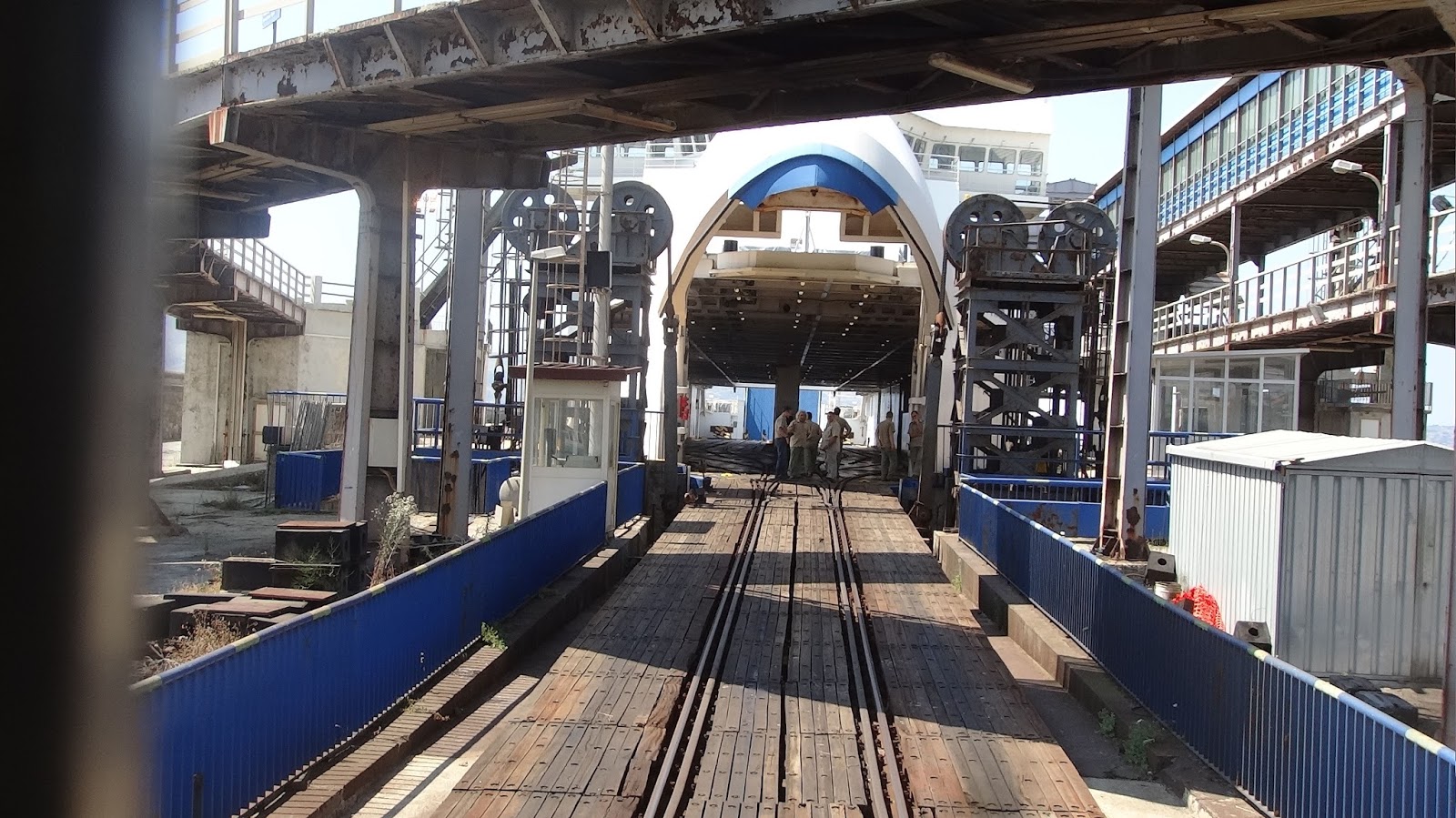
The train is driven onto the ferry

The other half of the train in the belly of the ferry

Seabastioano and his nonno

Our hotel, the Villa Taormina

View of the gardens from our balcony

A street scene in Taormina

Etna from the breakfast room

Still active

Beautiful Taormina

Etna from the Public Gardens

The Ancient Theater
Taormina and Etna above the scaena of the theater

One of Taromina's many piazze

The shaded jacuzzi

Sandy enjoys our balcony

The so-called Naumachia, actually a nymphaeum

Seascape and Taormina from Castelmola

Sunset behind Etna from the castle at Castelmola
Sicily!

This week we had no regular piccolo giro but a real viaggio, and it was to one of the most storied, mythical, and beautiful parts of Italy.  And it was wonderful.

To the average American, Sicily denotes only one thing, and that is sad because it is the least important aspect of this complex island.  Not to underestimate the influence of Cosa Nostra in Sicily, it continues to be great and thoroughly pernicious, but increasingly it is a cultural relic which is slowly dying.  But to anyone interested in myth, history, cooking, or just plain beauty, Sicily is a touchstone of all that is best about Italy.  Sicily has been a cultural crossroads since Neolithic times and has seen Mycenaean Greek, Phoenician, Archaic Greek, Carthaginian, Sikel, Classical Greek, Roman, Byzantine, Moorish, Arabic, Norman French, Aragonese Spanish, and Bourbon French influence, and that list is far from exhaustive.  And somehow all those influences have melded into something quite unique.  Not Italian, distinctively Sicilian.

        Our trip was something of a luxury, since it involved extensive travel and two nights’ stay in a hotel, but we claim as our excuse that rascal Fabio, who plied us with stories of his travels there two years ago and insisted we absolutely had to go.  What else could we do?  The real kicker was Fabio’s explanation of the mode of travel, by high speed train to southern Calabria, the toe of the boot, where the train was driven onto a ferry, carried across the Straits of Messina to the island, then driven onto tracks and off to the various cities along the coastline.  Imagine, a ferry that carries cars, trucks...and trains!  The whole trip, Fabio said, took about 5 hours and cost 26 euros, a relative pittance.  

So early last week we made our way to the Centro where one of Fabio’s close friends, Signore Domini, who owns a travel agency, made out our itinerary and reserved tickets for us.  And early Wednesday morning Fabio took us down to the station, validated our tickets for us, led us to the correct platform, and waved us good-bye as we boarded the train.  Needless to say, Fabio is very protective of us.  And we love him for it.

Now, in an earlier blog I mentioned that I had opted for a second-class ticket instead of first-class and almost immediately regretted it.  Signore Domini proffered first-class tickets again, and this time I took them...and almost immediately began to regret it.  The price was basically double.  But we read on the itinerary how the seats would be comfortable, how free drinks and snacks would be served, and how we could cool our tushes in luxurious toilets.  Maybe on some trains, but not on this one.  The compartments were quite nice, with big roomy seats, six to a compartment.  Think Hogwarts Express compartments, only updated.  And the train zoomed along at a brisk 120 mph.  But there was no snack cart selling Magic Frogs, nor even a bag of chips, and the two Americani had eaten breakfast early and anticipated a 5 hour trip!  The handsome older Italian gentleman with whom we shared the compartment was better prepared, and brought out a bag of pannini and fruit for himself and his adorable little five-year-old grandson, Sebastiano.  There were napkins, cups for the bottled water, even wipes for the hands and face.  All very civilized.  Meanwhile, we looked on with envy, and alarm.  But the biggest jolt of all was that every toiletta we tried was locked!  On a five hour trip!  There are some levels of cruelty that should mark Italian bureaucrats for the lowest level of Dante’s Inferno.

Still, the trip was speedy, the scenery spectacular, at least what we could see of it.  Perhaps some third of the voyage was through tunnels.  Americans go over mountains, Italian trains and interstate highways go through them.  Your ears will always alert you that a galleria is coming up in 2 seconds and that it will end in 2 seconds.  And by the time you reach your destination, your sinuses will be perfectly clear.

At little San Giovanni di Reggio on the toe of the boot we were throttled by a long queue to access a ferry, not an unpleasant prospect except that the air conditioning was turned off and we baked for almost an hour.  But, how can you complain when your turn comes soon enough and your train is pushed by a little work engine down a long ramp and into the belly of a large ferry.  Sandy was able to get video of the whole procedure, and I have to believe her fourth-graders will be bug-eyed when they see it.  Heck, I’m still bug-eyed myself.  Passengers are allowed to detrain and climb several flights of stairs to a salon deck for a spectacular view of the crossing.  A vista which I thoroughly enjoyed after I finally was able to pee and my eyeballs floated back down into their sockets.  Sweet Sandy not only did her business but bucked a long line at the bar-café and bought us some chips to pacify grumbling stomachs.

For anyone with an interest in mythology, these straits are storied waters.  Here were Scylla and Charybdis, a horrible whirlpool and a savage, man-eating monster on either side, the two of which dispatched several of Odysseus’ companions in a horrid meal and ultimately wrecked his ships.  Thrown up on the flanks of Mt. Etna, he confronted the cyclops Polyphemus, who gobbled up several of the survivors before the wily O devised a scheme to escape.  Meanwhile, beneath Etna, the imprisoned Titans are at work in their furnaces, forging horrible weapons, most notably Zeus’ thunderbolts.  And from the top and flanks of Etna can be seen the flames and smoke of their monstrous forges.

And, sure enough, our train whizzed through the little town of Scilla, without incident, I’m happy to report, nor did we confront a man-eater in the straits.  But I’m told the currents in the straits can still be quite tricky for the inexperienced sailor.  On the other side awaited the pretty town of Messina, ally of ancient Rome and a storied Greek colony in its own right.  Here we encountered another long, hot queue, exacerbated, we learned, by the fact that some hotshot from Rome was traveling in a following train and some 8 trains ahead of him were delayed to allow him to pass.  The computer system used to route the thousands of Italian trains per day is state-of-the-art...until it is thoroughly mucked up by the morass of Italian politics.  Thus did our 5 hour trip become an 8 hour trip.

But soon enough we were off again, and 40 minutes later we decamped at Giardini-Naxos and bade our new friends good-bye.  Nonno had gone to Rome where his son is enrolled at the University and was bringing little Sebastian back to his mama in Avola, south of Catania.  Avola is the home of my favorite red wine in the world, Nero d’Avola.  Naxos has its own claim to fame, being the oldest Greek colony in Italy, founded in 734 BCE by refugees from the Greek island of the same name, off the coast of Turkey, when their little settlement was sacked by the Persian armies.  Sadly, little Sicilian Naxos was also sacked, this time by the Syracusan tyrant Dionysius in 403 BCE, and so there is none of the old city to see, only the modern beach resort.  But for a classicist, just standing on this hallowed ground was a thrill.  And there, looming over us, was the real gem:  Taormina, Greek Tauromenion and Roman Taurmenium, clinging to the slopes of Monte Tauro.  

A quick cab ride took us to the heart of this beautiful little town and to our hotel, the Villa Taormina, where we were received by the gracious hostess, Signora Elena, who gave us a quick orientation and led us to our room.  And we knew those eight hours of rather uncomfortable travel were well worth the price.  The Villa Taormina is a restoration of a nineteenth-century villa, built in turn on some of the remains of an eighth-century convent, the Badia Vecchia.  The little hotel has only 10 rooms, but it is a gem, gorgeously decorated in period style (this was a villa in the luxurious sense of the word), but accentuated with classical statues and Medieval religious icons.  Our room was absolutely beautiful, spacious, decorated in period furniture, with a huge modern bathroom complete with a jacuzzi tub, and with a cute little balcony for two which overlooked a cascade of gardens rampant with jasmine, bougainvillea, ivy, laurel, all spectacularly happy in this semitropical environment.  Best of all, our room was equipped with a real, honest-to-goodness, efficient air-conditioner and the temperature in the room was sheer luxury.  Our heat wave continues, and in fact the fiercest heat has now made its relentless way southward into the heart of the Mezzogiorno.  We took a good half hour just to luxuriate in that cool air and ogle our surroundings.

By now it was early evening and the brunt of the heat was dissipating, so out we went for a stroll through the heart of Taormina.  Taormina was founded, in 358 BCE after the destruction of Naxos, by the father of Timaeus, a famous Greek historian and a name to conjure with in Roman historiography as well, since he is the first to speak of that new political force.  But it was founded on the site of an older trading emporium populated by Sikels, the indigenous people of Sicily, as well as Phoenicians and Greeks.  It managed to steer clear of many of the imbroglios of the warring tyrants in other Sicilian Greek colonies (a tyrant was originally an elected king in Greek towns, but these guys eventually learned to richly deserve the modern denotation of the word as well).  In 263 BCE, Greek Tauromenion allied itself with an up-and-coming power in southern Italy, namely Rome, and that alliance served her well for many years.  Tauromenion was awarded the status of allied city, which meant she retained political independence and was exempted from military exactions and other taxes.  In one of the so-called Servile Wars, when huge numbers of slaves rebelled and were suppressed only with great difficulty, Tauromenion became  a stronghold for the slave armies and suffered terribly in the ensuing struggle to unseat them.  She seems to have recovered quickly, but then her luck with the Romans ran out; she sided with the son of Pompey the Great in the civil war against Octavian, the future emperor Augustus.  The upshot was that her Greek citizens were summarily booted off their land in 26 BCE and the town became a Roman colonia, a settlement for retired Roman legionaries, and took the Roman name Tauromenium.  

Under the Romans, Taormina throve as well, and it was they who rebuilt the Greek theatre in grandiose style, changed the old Greek agora to a proper Forum, complete with a public bath complex, an odeion (a small theatre for indoor performances such as music and dance), and a huge nymphaeum, a water feature at the front of a huge cistern, with no fewer than 8 cascading fountains, just to show off the superfluity of water the little town now had thanks to the construction of two Roman aqueducts.  Taormina became a thriving Byzantine town when the Western Empire fell and maintained that role long after most parts of Sicily had fallen to the Moors.  But she doesn’t seem to have suffered much under Moorish rule either, since they recognized her strategic importance.

Today, with the exception of some spectacular ancient ruins, the little town is a Medieval city superimposed on ancient footprints.  We wandered down the corso, the decumanus of the Roman town, enjoying the enchanting piazze and churches, the little shops with their foods, designer clothes, and touristy wares of every description, the three monumental arches that define the limits of the old ramparts of the city, now almost totally lost, and everywhere those spectacular views of the azure sea sparkling in the sunset below.  We stopped by one ristorante to enjoy an aperitivo and some blues sung in Italian (!), then continued our amble for a couple of hours, found another nice restaurant down a side street where we enjoyed an octopus salad and a pasta dish, did yet more wandering as the night descended, and made our way back to our blessedly cool and comfortable room for one of the soundest sleeps we’ve had in many a day.

But there was one spectacular sight which we didn’t see, and I’m mortified to admit that it was in plain sight the whole time.  Early Thursday morning we were up, showered and ready to go early to take advantage of the coolness of the morning and avoid the hordes of German, British and Australian tourists who are brought mid-afternoon to the little town from the cruise ships anchored offshore.  We sat on the balcony of the sunroom and tucked in to the most incredible continental breakfast we have ever had, just ogling those seascapes.  But finally, I turned to the right and almost fell off my chair, for there was mighty Etna, brooding on the southern horizon, that unmistakable profile silhouetted in the morning sun and a respectable plume of smoke issuing from one of the two pinnacles she now has.  Nothing quite prepared me for the scope of that monster, the base of which stretched literally from one terrestrial horizon to the other.  Etna had been clearly visible from at least a half-dozen prospects we had enjoyed the night before and we both managed to overlook the one spectacle which clearly dominates a good third of Sicily!

We had booked an extra night at the Villa on the chance that the trip down might take longer than expected and leave us insufficient time to explore, a fortunate decision as it happened.  But still, there is more to see in Taormina than you can see in a week, so we scooted out into the cool morning air and strolled through the public gardens, replete with all the luxuriant vegetation that is so famous in Sicily, plus formal gardens and statuary...and more panoramic views of that brooding giant.  We hit the Theatro Antico just as it was opening at 9 am so we could enjoy it almost alone.  How can I describe the feeling of sitting in the cavea of that huge theatre, watching the roadies on the stage and the still largely intact scaena break down the British production of Carmen which had been staged the night before, and seeing Etna in the background?  Simply magical.  You’ve all seen pictures of that famous theatre, it’s the most spectacularly (and deliberately) sited theatre from the classical world.  But I had to think, what idiot producer or playwright in his right mind would try to stage a play in this theatre?  You’d be guaranteed to be upstaged by Etna every time.

We made our way back to the Villa to cool off, then went out for a light lunch at a cute little bar called Bocconcì where the pannini were served on an incredible little Pugliesi bun called a puccia, a new taste for us and a delicious one, spent the hot part of the day back at the villa just luxuriating in the outdoor jacuzzi and the gardens, not to speak of that cool room, then out in the late afternoon for a tour of the Forum baths and the so-called Naumachia which is in fact the nymphaeum I previously mentioned, then, one of our favorite excursions, a trip by city bus up, up, up the tortuous road to Castelmola, some 500’ above Taormina, which is itself 900’ above the sea, and to the old Lombard castle there for more fantastic panoramas and a view of sunset highlighting Etna from behind and turning that plume of smoke a rosy pink.  Back down the road, shaking our heads in admiration for the thousandth time at the skill of the bus drivers in southern Italy, and then to another simple but delicious dinner at 9 pm and so back to the Villa.

We didn’t manage to see everything we wanted to, but of course we never do.  Italy is an infinite variety of spectacles, a great part of its charm.  But we saw much and what we did see was amazing.  Before we planned our trip, we had asked Fabio which Sicilian town he would see if he could only visit one and he answered without the least hesitation, “Taormina!”  As we sat after dinner just savoring the day, Sandy asked how I would rate our time in Taormina on a 1 to 10 scale and my answer was a resounding 10.  As was hers.  We saw only a tiny slice of that incredible island, but it was an amazing one.  And someday, God willing, we’ll be back for more.  But we’ll travel in coach.


Monday, July 13, 2015

Italian Yuppies

Ogliastro Cilento

The Monastery of San Leonardo

The Basilica of the monastery

The cloisters

Founded 1601

The view from Teresa's terazza
Villa in Copersito

Palazzo Gallone

Olive mill in the frantoio

Mario Siniscalchi

Teresa's kitchen

First Course

Second course

Tiramisu

With Fernando, Teresa and Nunzio


Yesterday we had a feast, compliments of Ancel Keys and another of his devoted followers, this one born to the legacy.
Last week Fernando had invited us to go out for pizza along with two of his young friends, Teresa Sanna and her husband Nunzio Mastrolia.  It’s a tribute to the gentleman Fernado is that he’s always looking to connect us with bright, creative Italians who speak English, even though he knows he’s likely to be left out of much of the conversation.  As it happened, Nunzio’s English was flawless and Teresa’s quite good, although she is almost as reluctant to use it as we are to expose our own ignorance of Italian.  Nunzio is an academic who specializes in geoeconomics, especially the emerging market economy in China, and Teresa is a gastronome who studies and writes about the Mediterranean diet, not in the sense that most Americans think of it, but in the narrower sense first espoused in the West by Ancel Keys; that is, a cuisine traditional in this part of Italy, rich in olive oil, fruits and vegetables, with moderate consumption of wine and very little animal fat.  But diet comes from a Greek word that denotes ‘regimen’ or ‘mode of living’, not just food, and Keys knew that regular exercise was an integral part of the whole regimen.  See a former blog for more details.  Better yet, buy and study one of Keys’ popular books; it could well save your life.

We had a wonderful time with this delightful couple, talking about the world economy, the crisis in Greece, how market economies can or cannot survive various political systems, but, as usual, the conversation made its way eventually to food, and specifically where and how to procure the best seafood in Agropoli.  When she discovered that we were foodies as well, Teresa generously offered to treat us all to dinner on Friday.

Friday evening at 6:30 Fernando came by the villa and picked us up to take us to our feast in Ogliastro, a small town about 6 miles away on the next ridge over.  As it happened, we had made a recent unplanned trip to Ogliastro and had been seduced completely by that little charmer, so we were even more excited by our return.  Hans had developed some brake problems last week, which Nicola, his owner, had quickly and cheerfully corrected, but the new brake shoes, as they are wont to do, made a horrible grinding noise when I first applied them, and we were so concerned that this might be a major problem that we opted out of our planned trip to a mountain town some 30 miles from here and headed up a provincial road to Ogliastro in order to take the back roads back to Agropoli.  

We came into Ogliastro from the southwest and decided to stop for coffee at a bar-cafe with a panoramic overlook to let the Japanesa do her thing and let my nerves settle a bit.  We had a dramatic view of the upper reaches of the town and noticed at the very top what appeared to be a huge castle.  We downed our coffee, asked the kind young server for directions to the Centro, and headed up into the heart of Ogliastro.  Fortunately, we missed the turn—unusually, Ogliastro’s center is down on a lower slope of the ridge, a fact that puzzled Nunzio as well, I discovered—so we simply made our way to the top of the town on the theory that that is where the Centro should be.  No Centro, but there was that huge building, and it was accessible!  We’re always looking for tourist attractions that some Italian bureaucrat can’t prevent us from seeing.  It turned out our castle was no such thing, at least not in a later manifestation.  It was a monastery, devoted to San Leonardo, attached to a huge basilica which dates from 1601.  The nave of the basilica showed some desultory efforts to preserve and perhaps even restore it, and we wandered through a beautiful cloisters, overgrown suggestively with trumpet vine and bougainvillea, as well as several of the service rooms.  Much of the building still had its gorgeous cross-vaulted ceilings, the flat bricks the Romans preferred substituted here by worked slabs of the local limestone.

We wandered on down to the Centro eventually and found the mother church (closed) and the palazzo of the Stefano family (closed), but we were delighted with our unexpected panoramas and that fantastic monastery.

Long-winded way of saying we were very happy to be returning to Ogliastro and to our new friends especially.  Nunzio met us at the entrance to a large, four-story house which turned out to be his childhood home, where his parents live and his father still practices medicine, and where his brother still lives and practices law.  Nunzio and Teresa live on the second level, and their house is a stunner: gorgeous tile floors, striking contemporary furnishings, a kitchen to die for, and a study with book shelves to the ceiling along one wall which is easily 20’ long.  Dave was drooling.  But French doors from the dining room and the study open onto the real star of the show, terazze with spectacular vistas across the Colle San Marco where our little place is and to the sea beyond.  To the north we could see part of the Paestan Plain, to the south the stunning little hill towns of Prignano, Torchiara, and in the distant southwest Monte Stella and my favorite town in the world, Castelabbate, clinging to the side of a cliff so it won’t tumble into the sea.

Now, it was not much past 7:30 pm, and no self-respecting Italian is going to eat dinner at that ridiculous hour, so we trundled into Fernando’s trusty car and off we went to Copersito, a little frazione (suburb is as close as I can get) of Torchiara.  We parked and wandered down a cobbled street past villas with their own fabulous views of the sea, past one, two, three palazzi!  Definitely not the low-rent district.  Nunzio made a quick phone call, explained that this was the one chance the Americani would have to see an attraction in one of the palaces, and soon a door opened and we were greeted by Mario Siniscalchi, direct descendant of the noble Gallone family which had built the core of the palace.  But what our friends wanted us to see was the nineteenth-century frantoio, the olive oil processing plant, which was housed on the ground floor.  Mario conducted us to the press room where he explained how the giant olive mill ground the harvested olives to a pulp.  The pulp was then put in flat woven baskets with holes at top and bottom, which were stacked on a spindle on a large hydraulic press and then squeezed to release their oil and vegetal water.  The liquids drained directly into a sump in the middle of the floor where the oil floated to the top (oil and water have different densities) and then was skimmed off and put in the huge amphorae we saw along the wall.  Mario next showed us the cella olearia, the olive storage room, cool and dark, and the cella vinarea where the wine was stored.  

We thanked Mario for his kindness and then wandered, led by a cute little black mutt, down a side street toward the center of this little community—again, down, not up.  Strange!— and then headed back to Ogliastro for some dinner.

As Teresa busied herself in the cucina, Nunzio showed us a professional video of the monastery.  Excellent production values, almost no information.  Sadly, even the consortium which is trying to raise money to restore the basilica has apparently not done any research on the history of their star attraction.  Meanwhile Teresa was busy in that killer kitchen, bringing out one gorgeous dish after another. and old Dave was becoming more and more excited.  

Finally we were called to dinner, where Nunzio served us a chilled Vermentino, a white Sardinian wine with just a slight sparkle to it, a perfect accompaniment to a summer meal, and a sentimental favorite of Teresa, who is a native of that fair island.  And Teresa brought out platter after platter of beautiful vegetables, all cooked simply but perfectly and dressed only with the best olive oil.  There was aqua sale, one of our favorite dishes in the world, basically very stale bread over which you pour the flesh and juices of dead-ripe cherry tomatoes, chopped roughly and seasoned with salt and a little oregano.  How can such a simple dish be so perfect?  But in this case served on what appeared to be large bagel halves.  I tried to eat mine like a bagel, and after a near culinary disaster, Teresa kindly explained that you broke up the bread with your fork and ate the pieces.  There were thin slices of grilled zucchini and eggplant, a medley of red peppers and black olives—a sort of caponata.

With this course we had little slices of a deliciously funky salsiccia, very similar to the Lucanian that Fernado and Fabio introduced me to six years ago.  In other words, a sausage recipe that goes back easily 2700 years.  There were delicious, squishy little boconcini, the small mozzarella di bufala cheeses for which this area is famous, as well as a burrata, an impossibly rich mozzarella with pure butter in its core.  To complete the course there were wedges of good, rustic whole-wheat bread.

The next course was composed of a timbale of fresh anchovy fillets over an herbed stuffing, over which was served a pepper relish.  And if you’ve only ever tasted the tinned anchovies, pledge to put aside all your preconceptions about that noble little fish. The dish was stellar. There were fagiolini, green beans, in this case the huge, flat variety we used to call leather-britches and that remind us both so much of Sandy’s grandmother, and cooked in the same way, slowly simmered for an hour or more, and in this case dressed with tomatoes.  There was a dynamite little dish of escarole, scarola, slow cooked as well to bring out all the latent sweetness of that naturally bitter green, and dressed with sultanas, pine nuts, and oil, alla Siciliana.

Desert was little sformati of tiramisu, a perfect light desert for heavy stomachs.

As we dined, we enjoyed more wonderful conversation.  It is easy to see that Nunzio, who is classically trained in addition to his grounding in economics, is something of a philosopher and theoretician.  Meanwhile, in her halting English and my bad Italian, I learned from Teresa that she is intensively researching the Mediterranean diet in its broad sense as well as the core cuisine, and that every dish we had been served was in accordance with the diet and composed only of local foods.  Needless to say, she was preaching to the choir.

So, these young people have it made, wouldn’t you say?  A beautiful house in a gorgeous little town, wonderful food and wine, fulfilling careers.  But sadly, that is not entirely correct.  Nunzio has taught at a university in Rome for the last six years as adjunct faculty, a role I know only too well.  Crappy pay, no benefits.  But this year, for reasons unexplained, the university refused to renew even the temporary contract of this brilliant young man who has published extensively and would easily be a star in any American university.  And, though I am not completely sure, I am willing to wager a year’s salary that it has something to do with making room for some political flack with absolutely no talent but who is better connected.

There is a paradox here.  Individually, familially, Italians adore their young, dote on them, spoil them beyond belief, in fact.  An Italian parent would no more boot a child out of the household at the age of 24, 30, 35, than they would chop off their own right hand.  But corporately, institutionally, Italy has for many years cannibalized her young.  Case in point: all around the Bay of Naples, on any given early morning there are fires burning, burning, burning.  It seems that Camorra, the local mafia, ships in toxic waste from the industrial north and pays local farmers a pittance to burn it in the middle of the night when no Italian bureaucrat would dare inspect.  I read an article last summer that suggests the consequent incidence of cancer among the very young, those under the age of 12, is some 10 times that of any remotely normal population.  The good people in northern Campania are killing their own children, at the behest of the most pustulent element of Italian society.

But for the not-so-young, perhaps, the cannibalism is even more cruel, a stultifying, dream-killing hierarchy which absolutely defies competency or merit and condemns a huge percentage of Italy’s younger population to lives of desperate mediocrity. even if they are lucky enough to find a job when some hack finally consents to die or retire.  Oh, I have no doubt that Teresa and Nunzio will be fine.  These are incredibly bright and creative young people, and they will create their own opportunities, whatever the obstacles thrown in their paths.  They are already talking of starting their own publishing company, but in this case either on-demand desktop publishing or e-books, with a target audience of China!  It seems the Chinese are fascinated by Italian cuisine, and our friends envision brief histories of paradigmatic Italian foods.  Imagine, in a country with a population of billions, if you sell an e-book for a dollar to 250 million, you have made a small fortune, especially when the cost of publication is minimal.

The one route of escape for talented young professionals like Teresa and Nunzio, short of giving up and leaving Italy as so many continue to do, is to escape on the ether.  The world wide web is the great equalizer of opportunity in the newly emerging information economy.  But, sadly, even here Italy is fighting a rearguard action against her young.  The only possible way that she can absolutely ensure a third-world economy within the next ten years is to refuse to move to fiber-optic cable-enabled internet access.  And internet service in Italy is abysmal.  Another article I read last summer suggests that little over 10% of Italian internet traffic travels over fiber, the lowest rate of any major European economy.  When I asked why this was so, a very thoughtful friend pointed out that there is one man in Italy who controls some 85% of the content that travels through the airwaves via radio and television, and therefore has the most to lose if Italians have the freedom to receive content through their computers.  His name is Silvio Berlusconi.